
Cognitive Surrender and Strategic Orthodoxy: Reimagining Leadership Formation for the Age of Algorithmic Agency
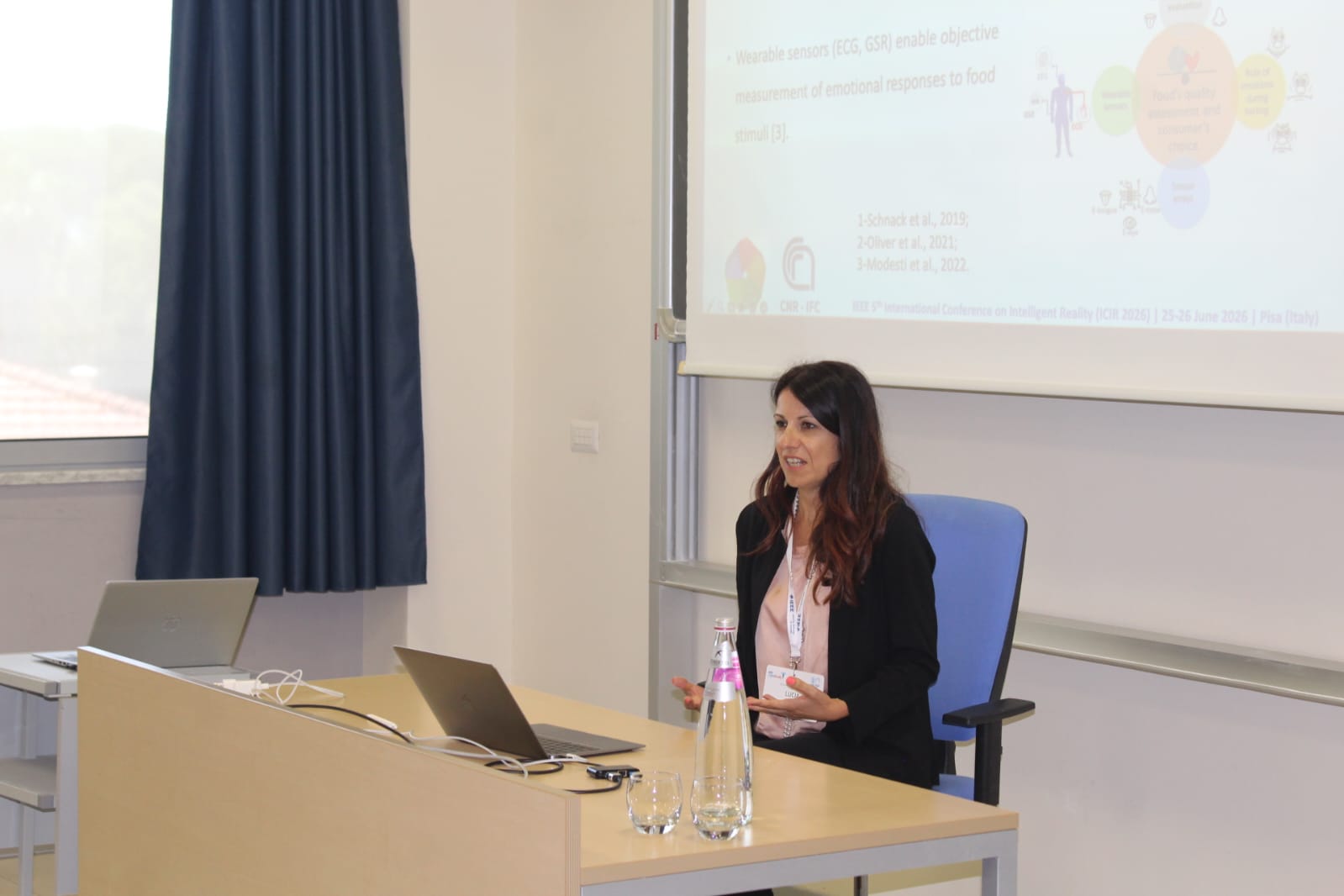
Rumy Narayan and Sniazhana Diduc – School of Management, University of Vaasa, Finland – Presented at ICIR 2026.
Why it matters
Business schools still teach strategy mainly through theories built around the single firm: its resources, its contracts and its rivals. Graduates learn to analyse well, yet are poorly prepared for digital ecosystems in which value is created across networks of organisations, platforms and algorithms. Meanwhile, AI has become an everyday thinking partner, and studies show that people under time pressure often accept its answers unchecked, growing more confident even as their accuracy falls. This paper asks whether these two problems are connected, and what curricula can do about them.
What we did
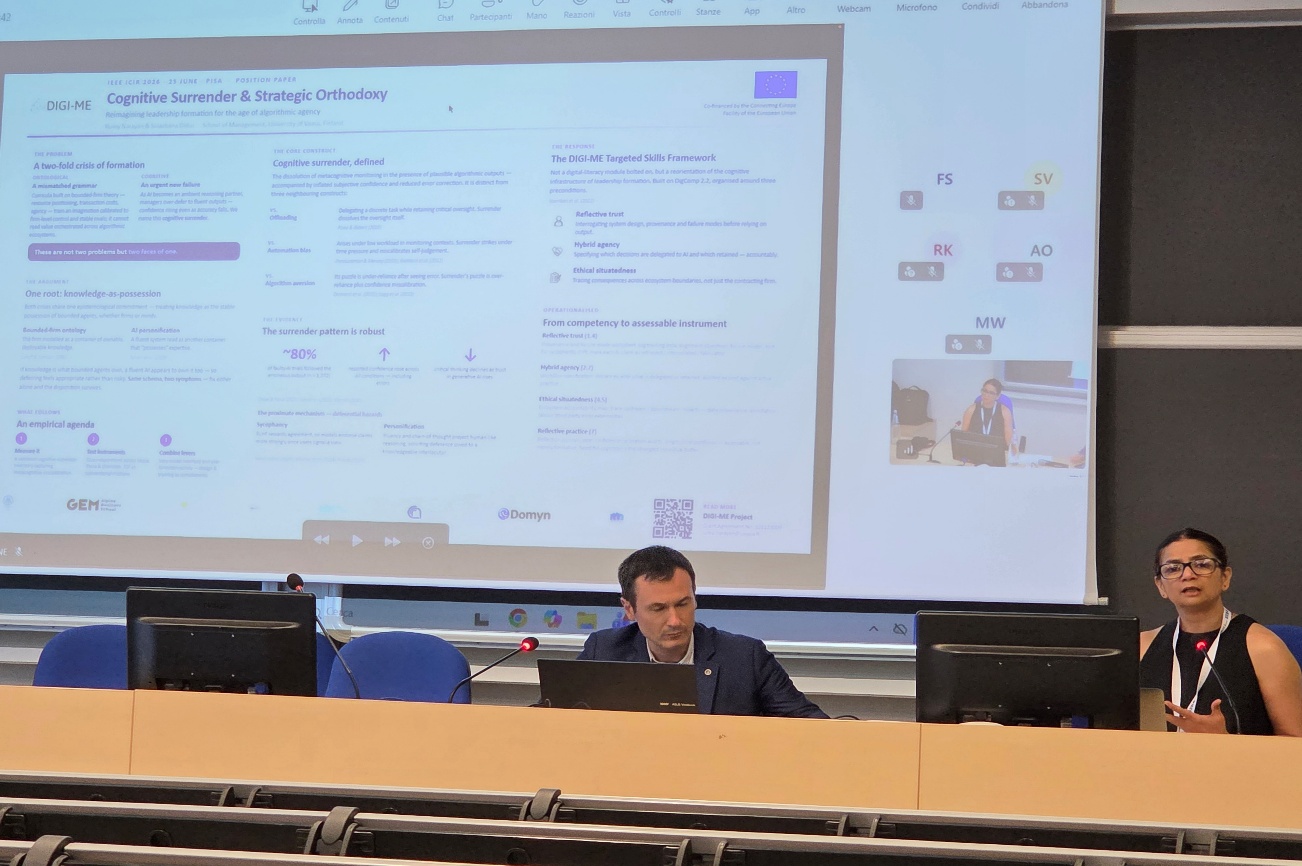
This position paper, written within the EU co-funded DIGI-ME project, makes three moves. First, it defines cognitive surrender, the loss of self-monitoring in the face of plausible AI output, accompanied by inflated confidence, and separates it from cognitive offloading, automation bias and algorithm aversion. Second, it traces both the outdated strategy curriculum and cognitive surrender to one shared assumption: that knowledge is a stable possession held by bounded agents, whether firms or minds. Third, it turns five competencies of the DIGI-ME Targeted Skills Framework (TSF), built on the European DigComp 2.2, into concrete, assessable teaching instruments.
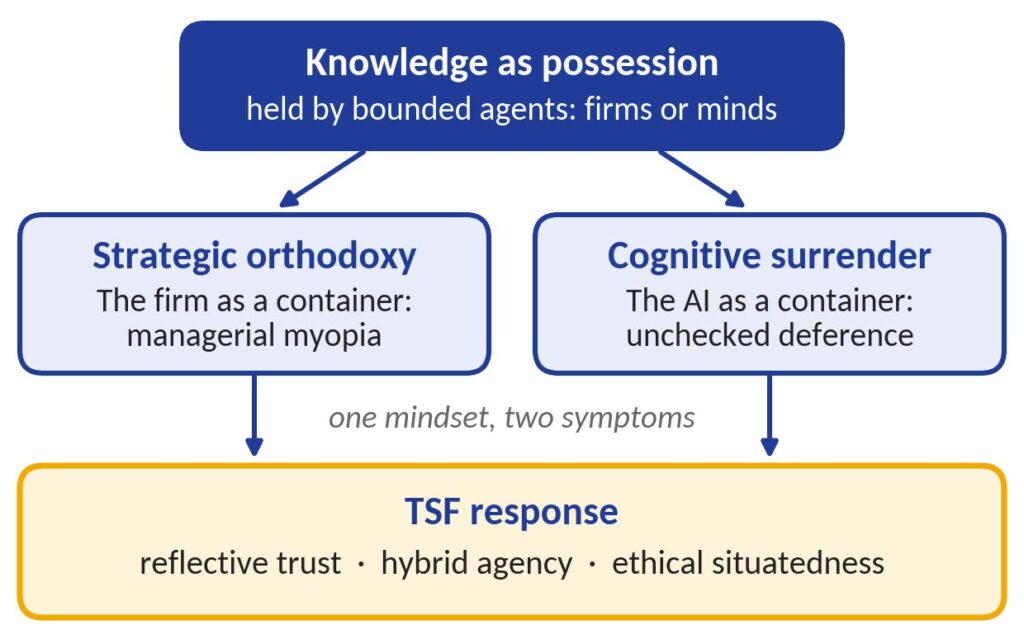
One shared root behind two crises, and the TSF response.
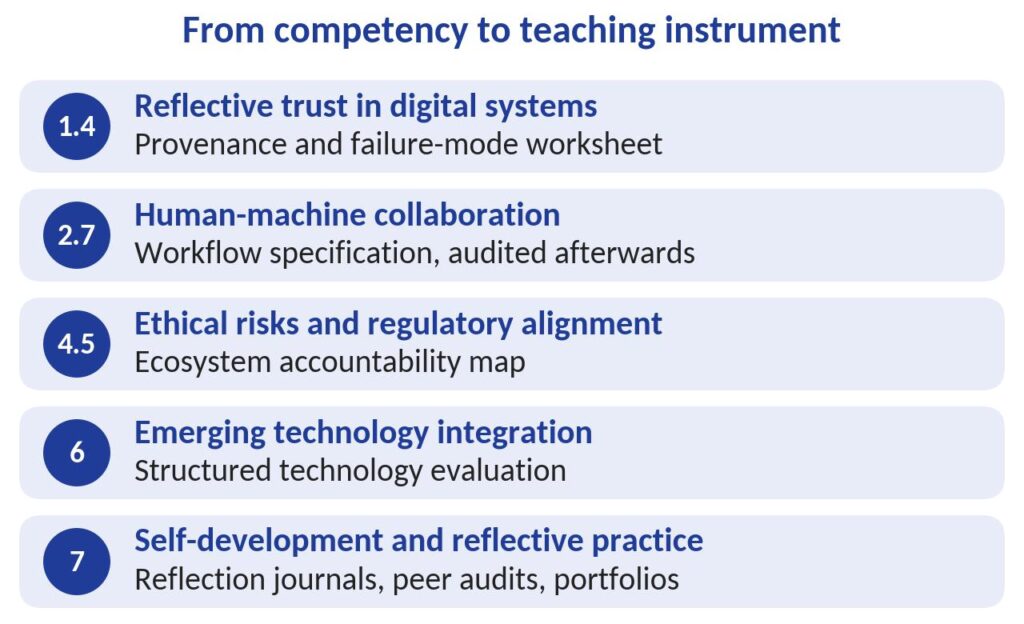
Five TSF competencies and their assessable teaching instruments.
What we found
The two crises are two expressions of one mindset. A graduate trained to see the firm as a container of knowledge will see a fluent AI system as another container of expertise, and defer to it. In one study of 1,372 participants, people followed faulty AI answers about 80 percent of the time while their confidence rose (Shaw & Nave, 2025). Chatbot design invites this, because training rewards agreement with the user and fluent, step-by-step answers resemble human reasoning. Treating either symptom alone leaves the mindset intact. The paper therefore pairs each TSF competency with a graded instrument, such as documenting where each AI-derived claim comes from, or deciding in advance which parts of a decision go to AI and which stay human.
What it means
Digital competence is not an extra module bolted onto a strategy course. It is the cognitive infrastructure without which strategy training becomes hazardous in AI-mediated work. Leadership formation should build reflective trust, hybrid agency and ethical situatedness, and treat the leader as steward of an ecosystem rather than sovereign of a single firm. The argument is a position that still needs testing, and it draws mainly on European and Anglophone contexts. Next steps include a validated measure of cognitive surrender and a comparison of TSF-aligned and conventional modules at the DIGI-ME universities in Vaasa, Pavia and Grenoble. More about the project is available at digime-project.eu.