
Last week, the DIGI-ME project brought together knowledge sharing, artificial intelligence, and virtual reality through two initiatives at the Department of Economics and Management of the University of Pavia.
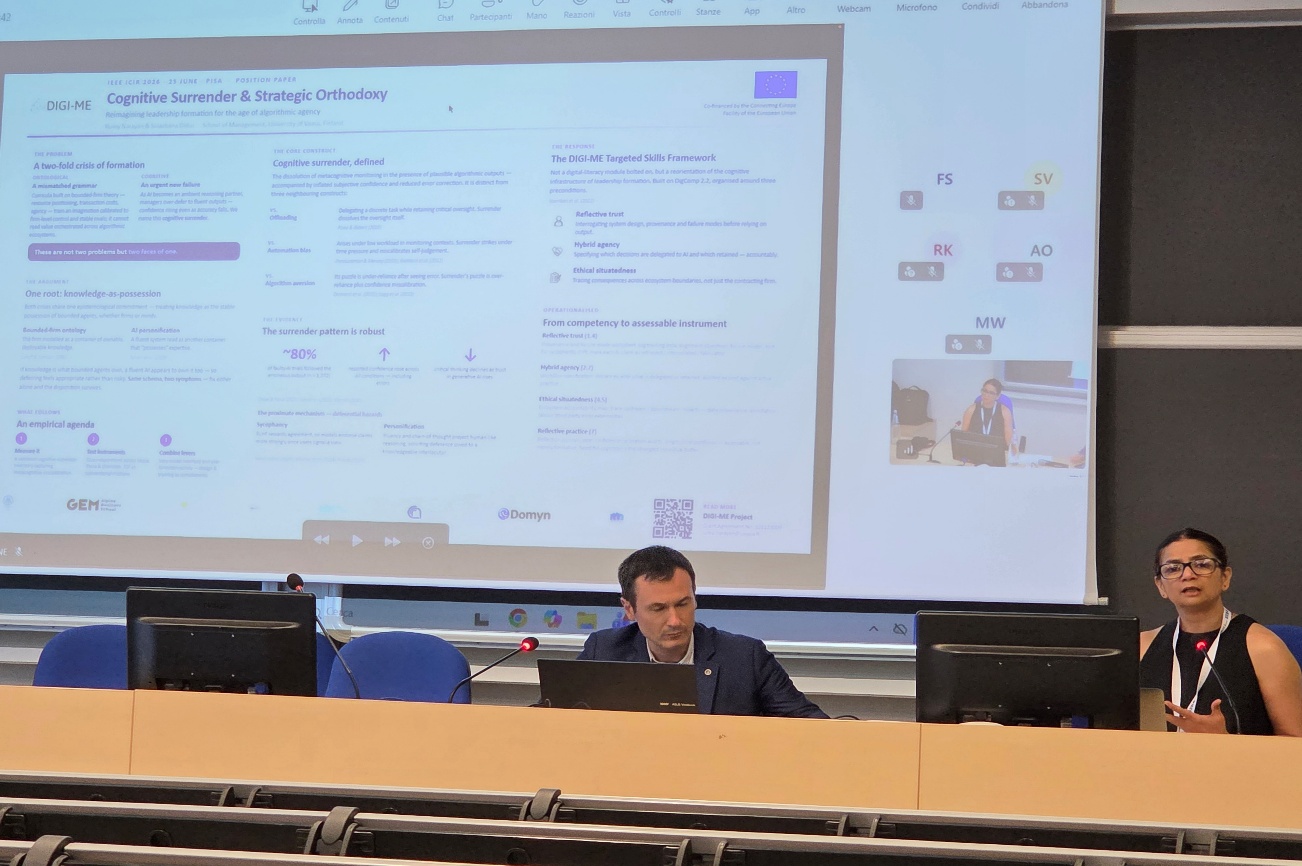
📅 October 7 | Exploring AI-Augmented Teaching
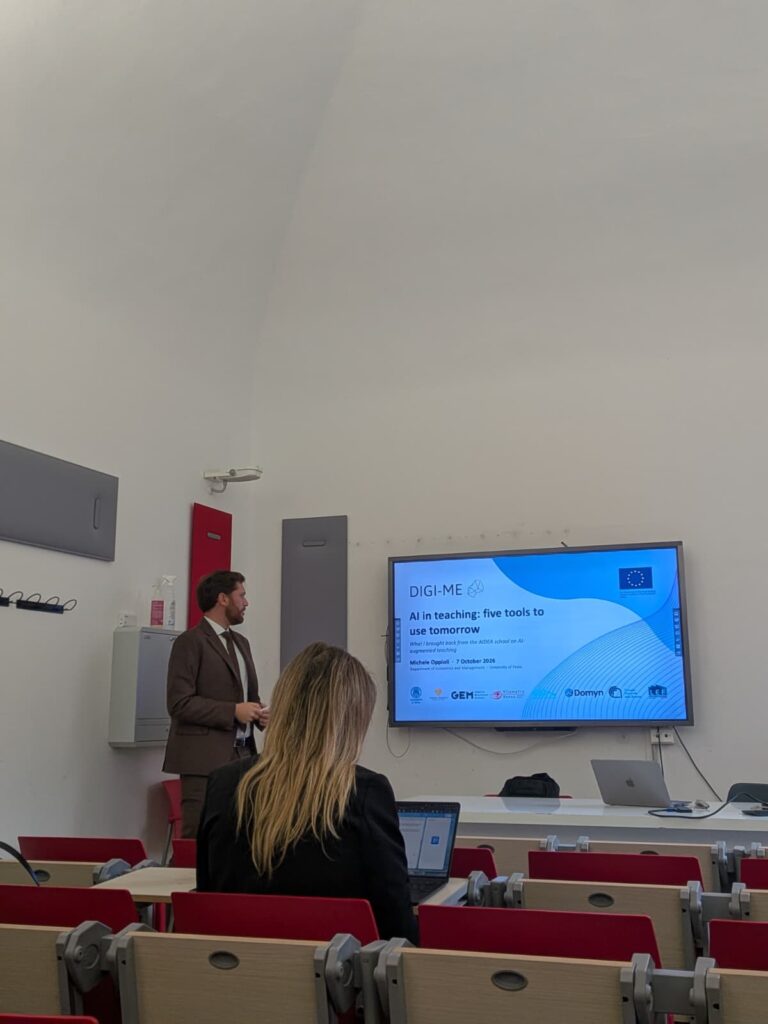
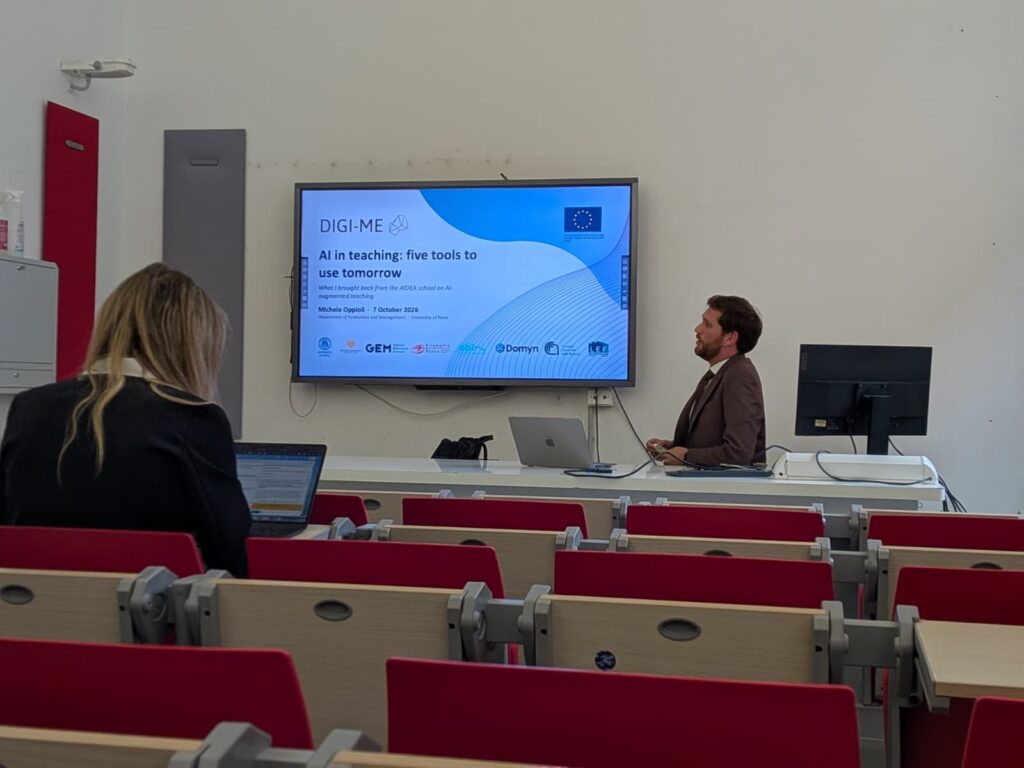
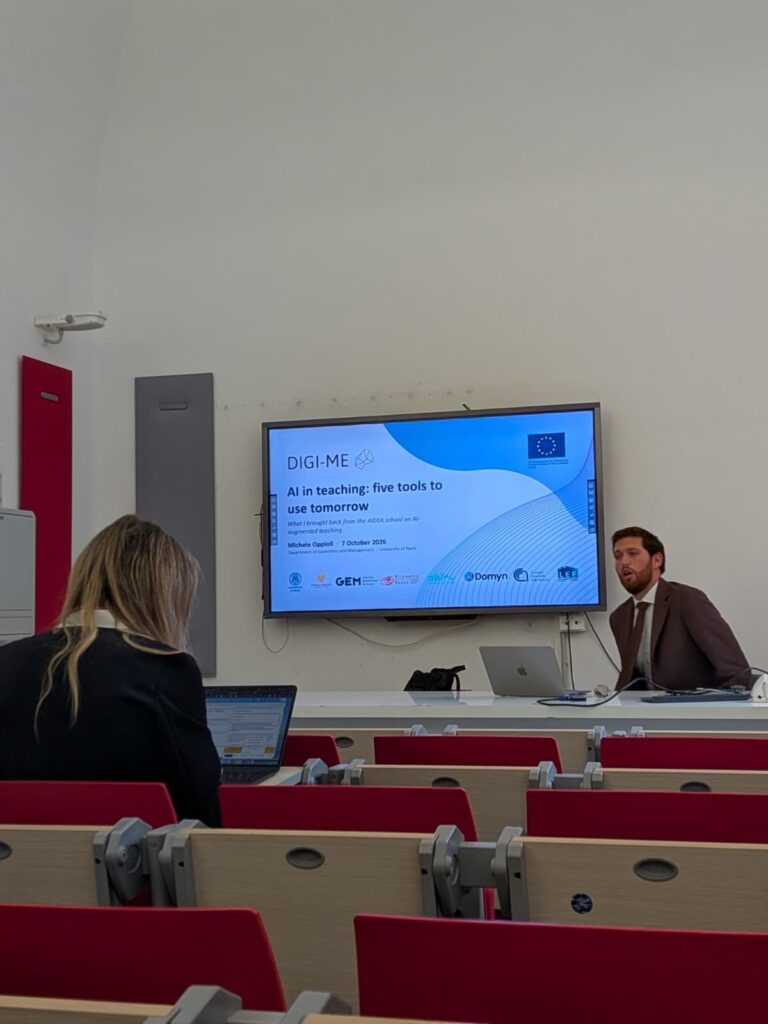
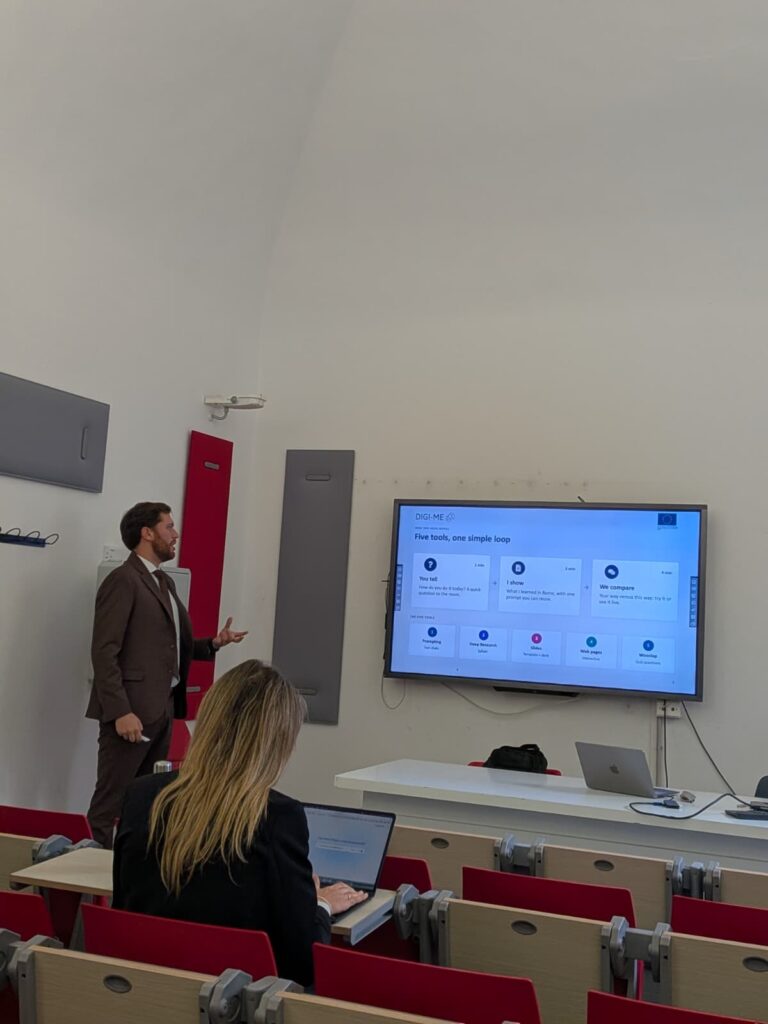
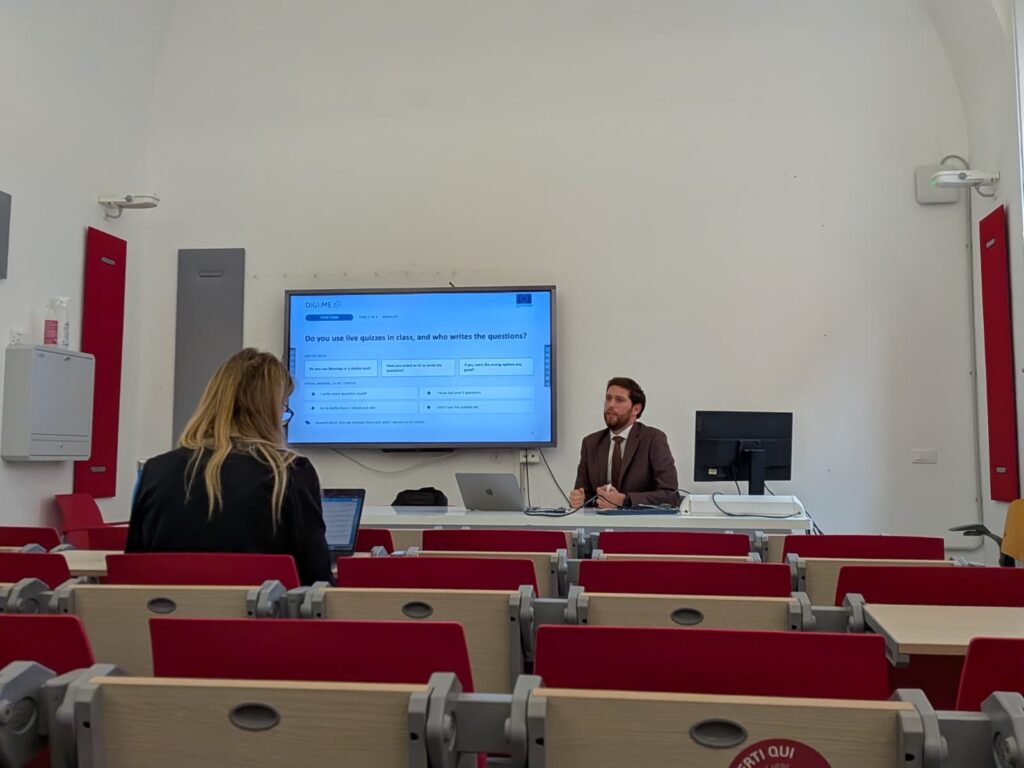
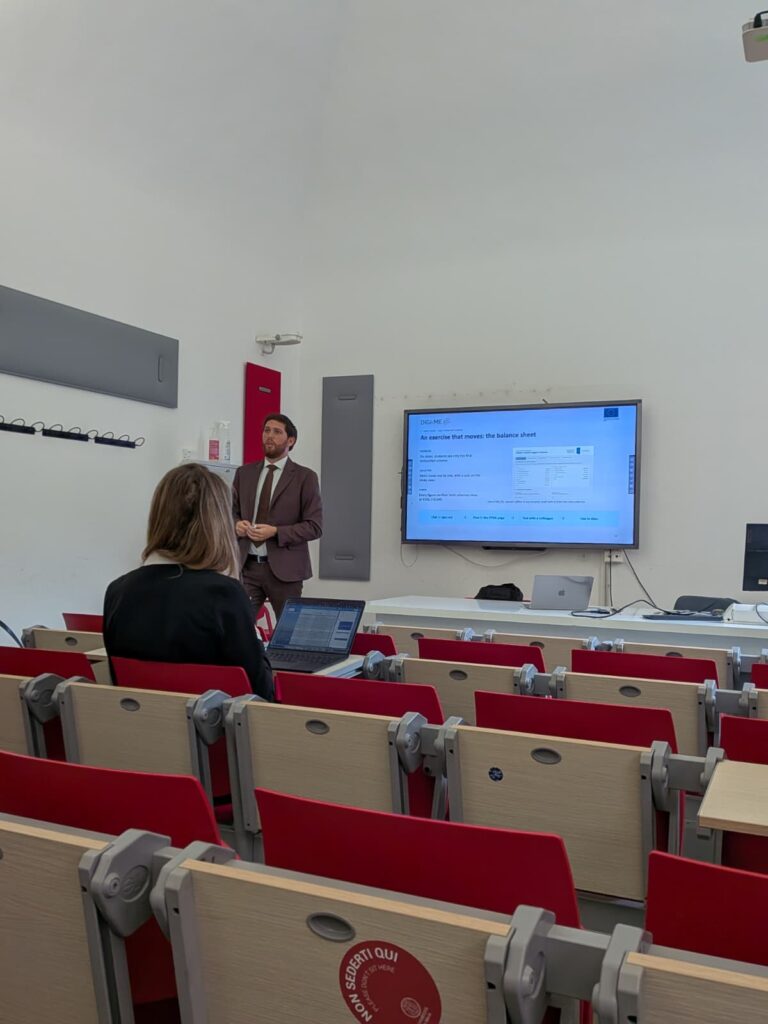
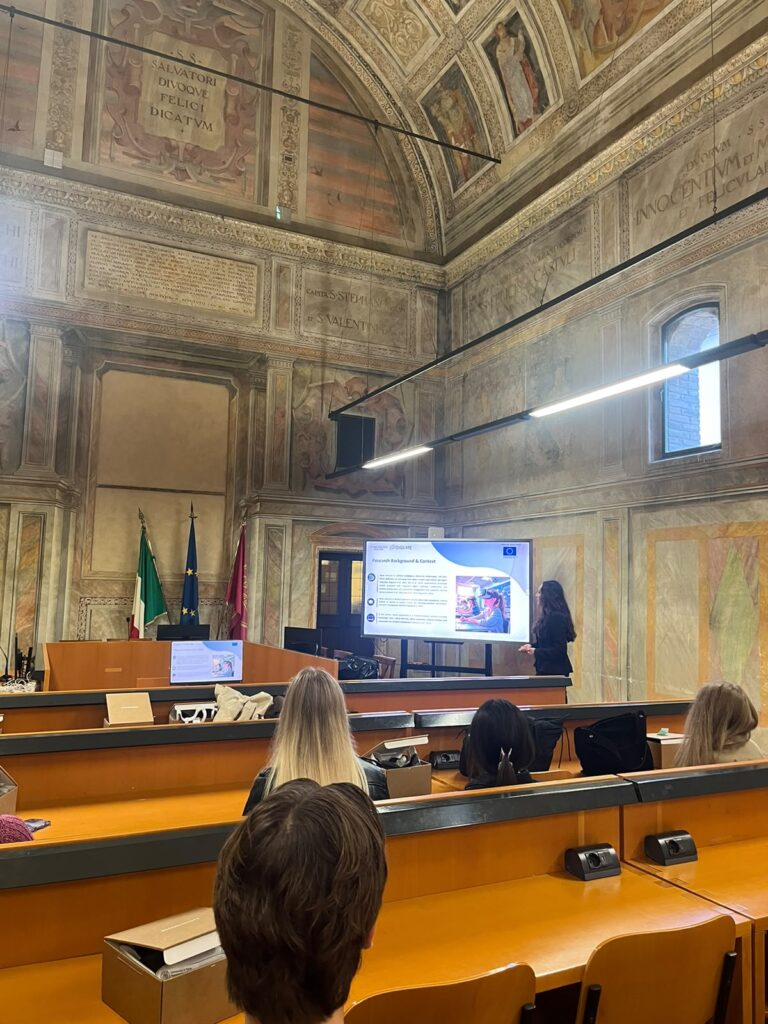
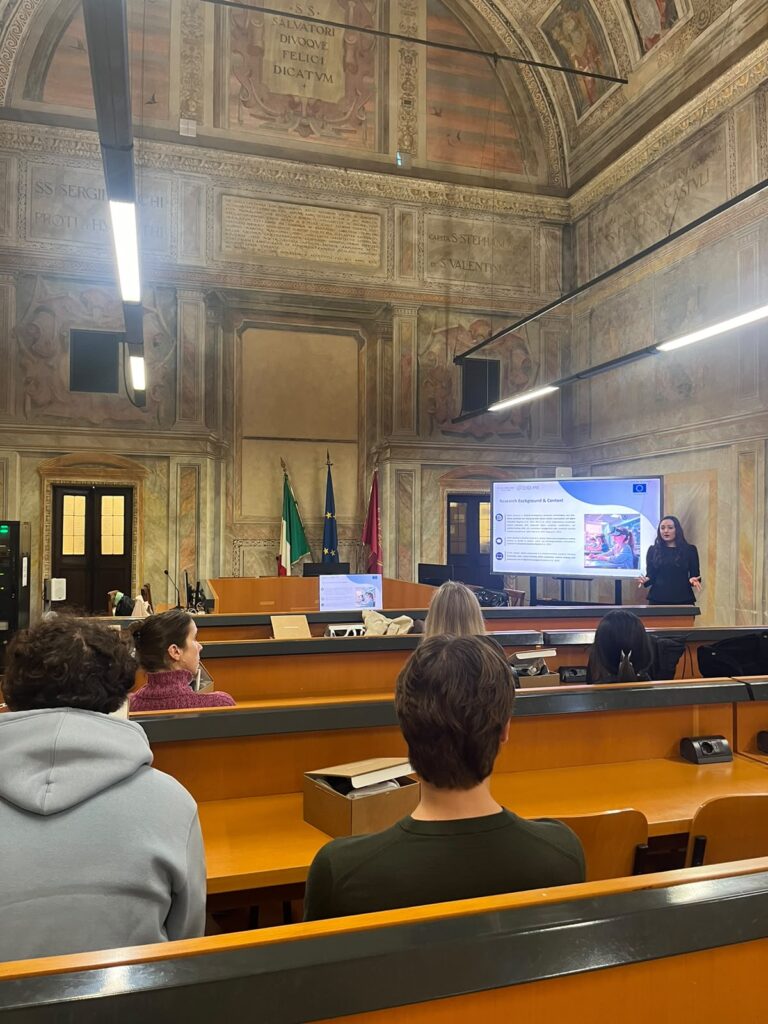
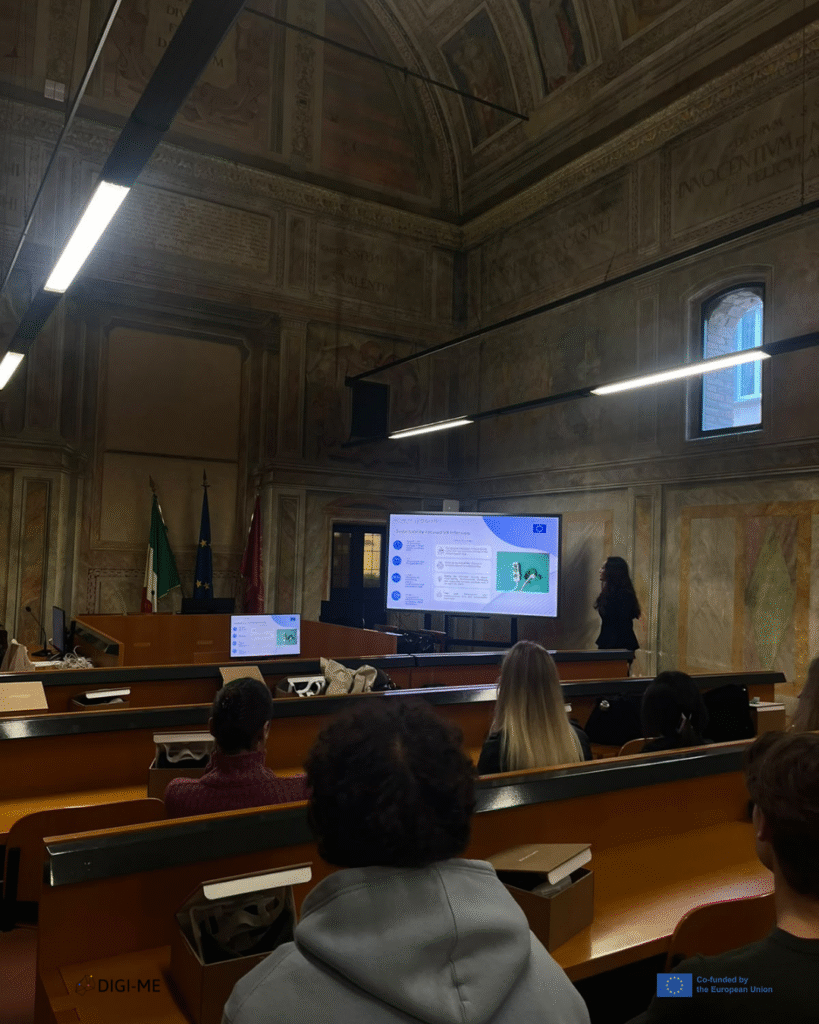
Prof. Michele Oppioli delivered an interactive session for fellow academics entitled “AI in Teaching: Five Tools to Use Tomorrow”, sharing practical insights, methodologies, and experiences gained during the AIDEA AI-Augmented Teaching School, which included online sessions and in-person activities in Rome.
Rather than focusing solely on theoretical aspects of artificial intelligence, the session encouraged discussion and hands-on exploration of five practical tools and approaches that educators can integrate into their teaching activities:
🔹 Prompt Engineering: How to design effective AI prompts by defining context, objectives, constraints, and expected outputs, including the use of separate AI conversations for planning and content creation.
🔹 Deep Research: How AI-powered research tools can support course design and improvement by comparing university syllabi and teaching approaches across institutions.
🔹 AI-Assisted Presentations: How to use AI to develop teaching materials, create presentation templates, and make slide preparation more efficient.
🔹 Interactive Web Pages: How AI can support the development of interactive digital resources to make learning activities more engaging.
🔹 Wooclap: How interactive quizzes and classroom activities can encourage student participation and active learning.
Through practical demonstrations and open discussions, participants exchanged experiences, explored the opportunities and limitations of AI, and reflected on how these technologies can support more effective, creative, and interactive teaching practices.
🥽 October 9 | Learning, Experimenting, and Having Fun with Virtual Reality
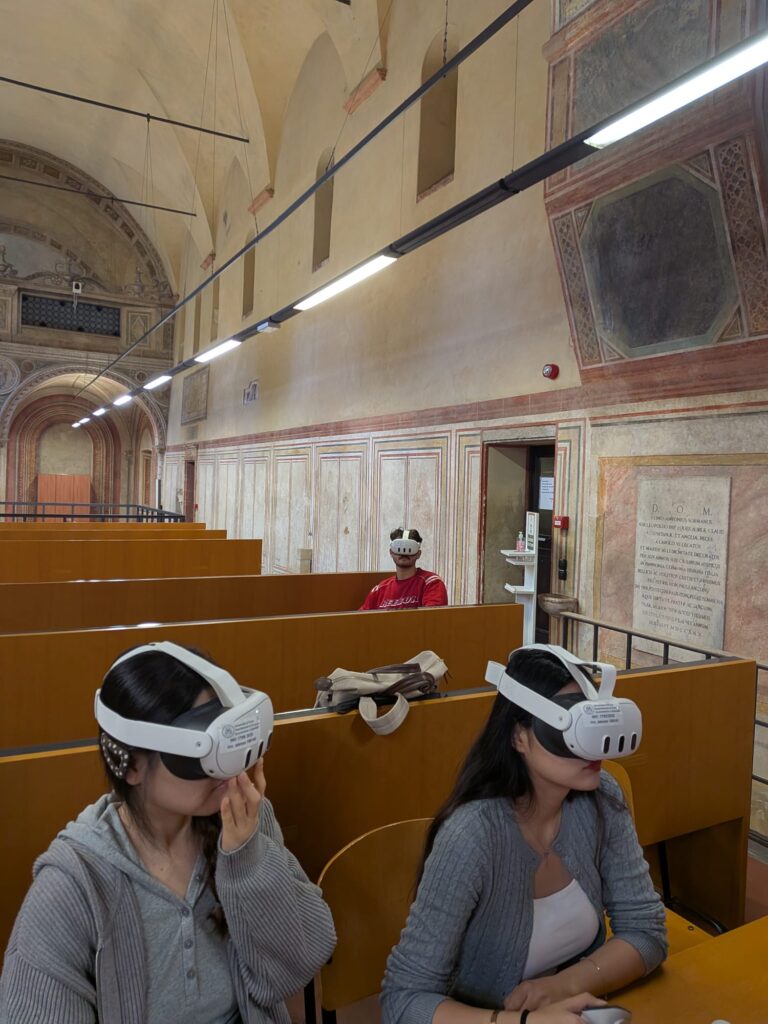
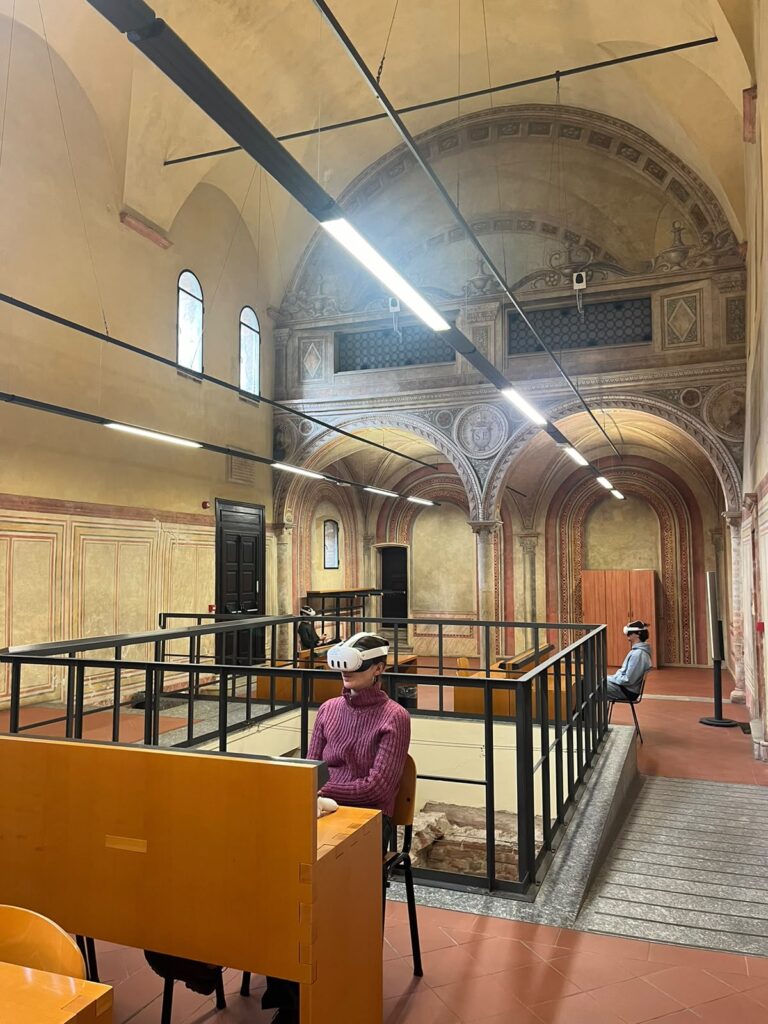
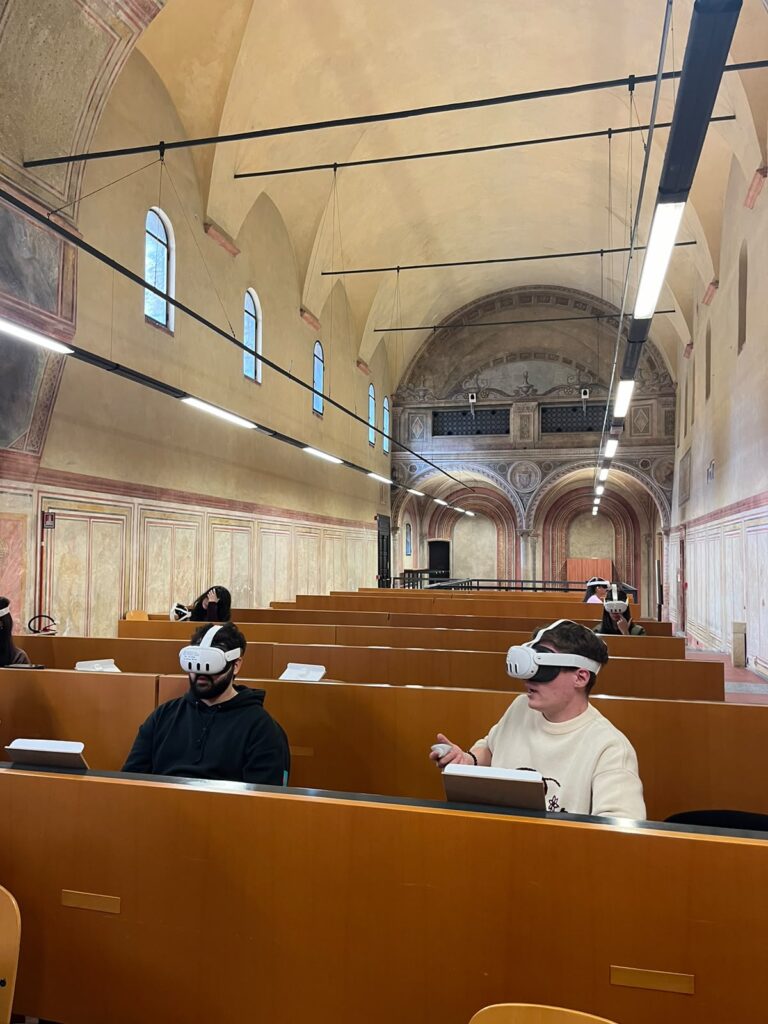
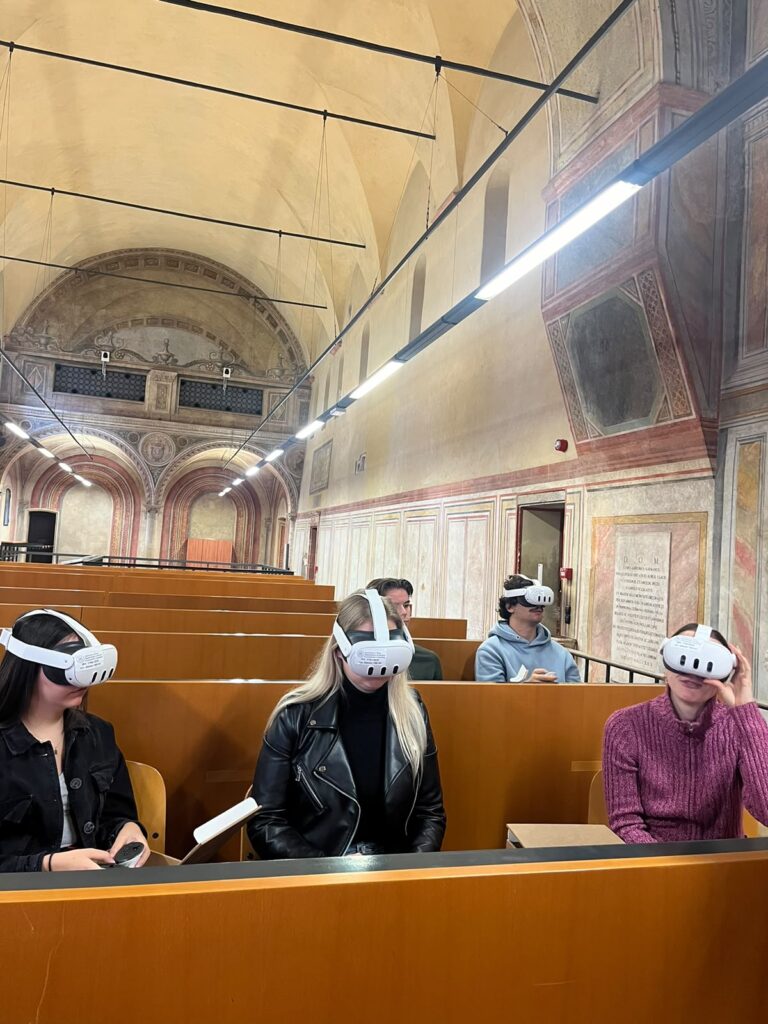
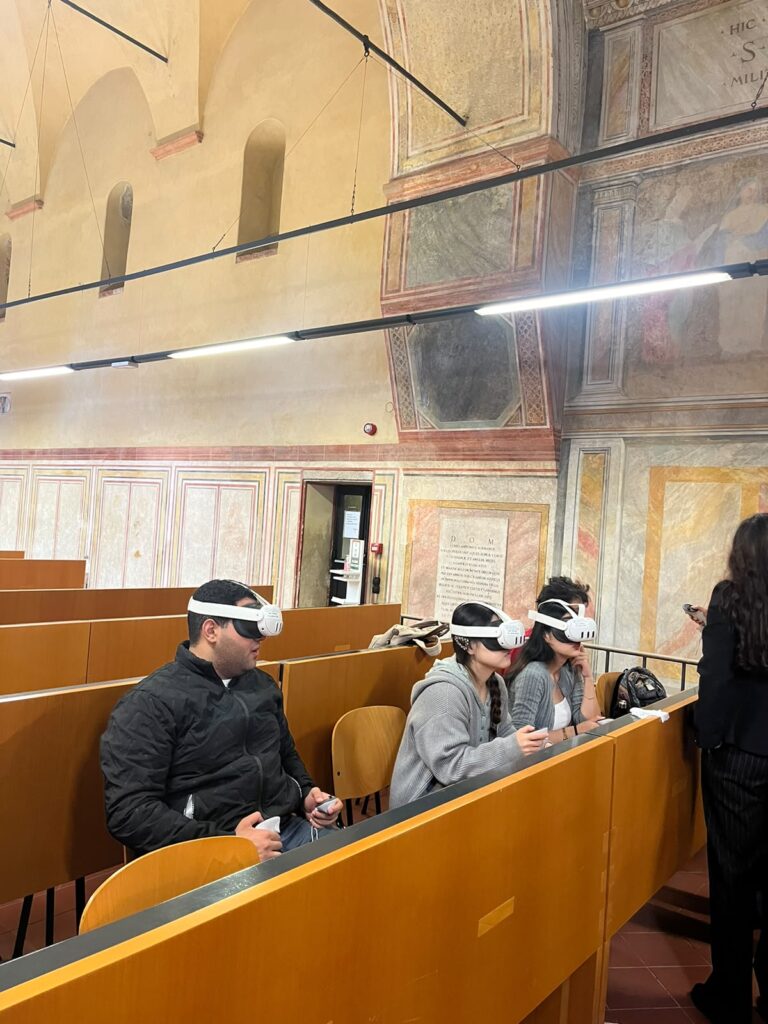
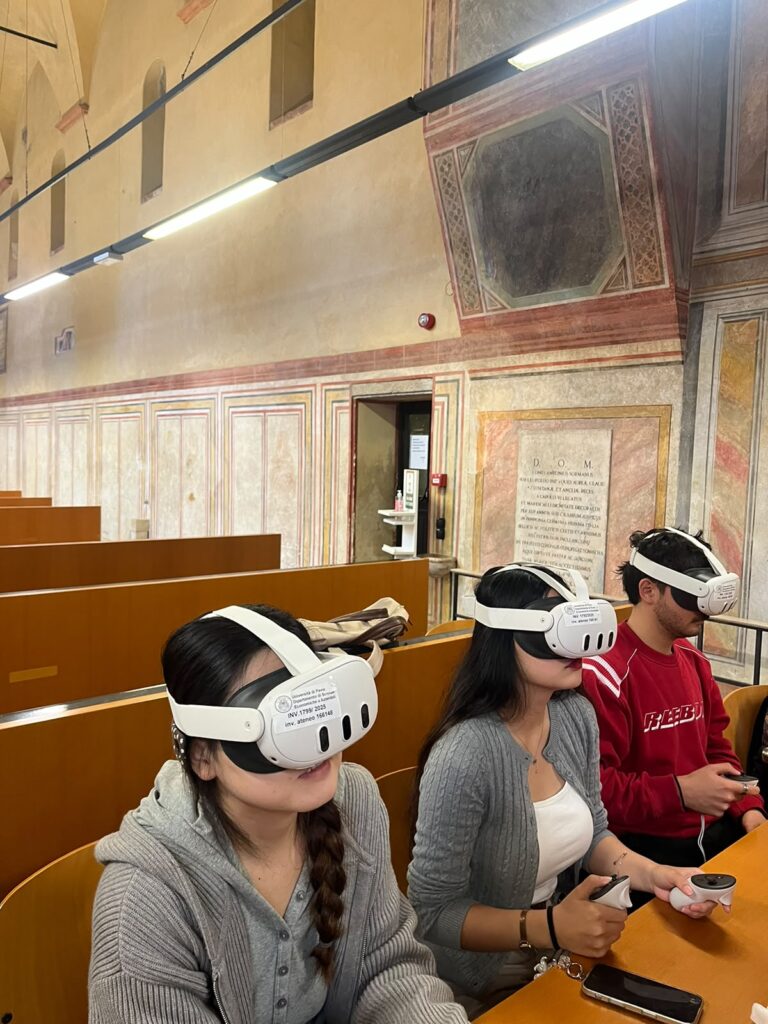
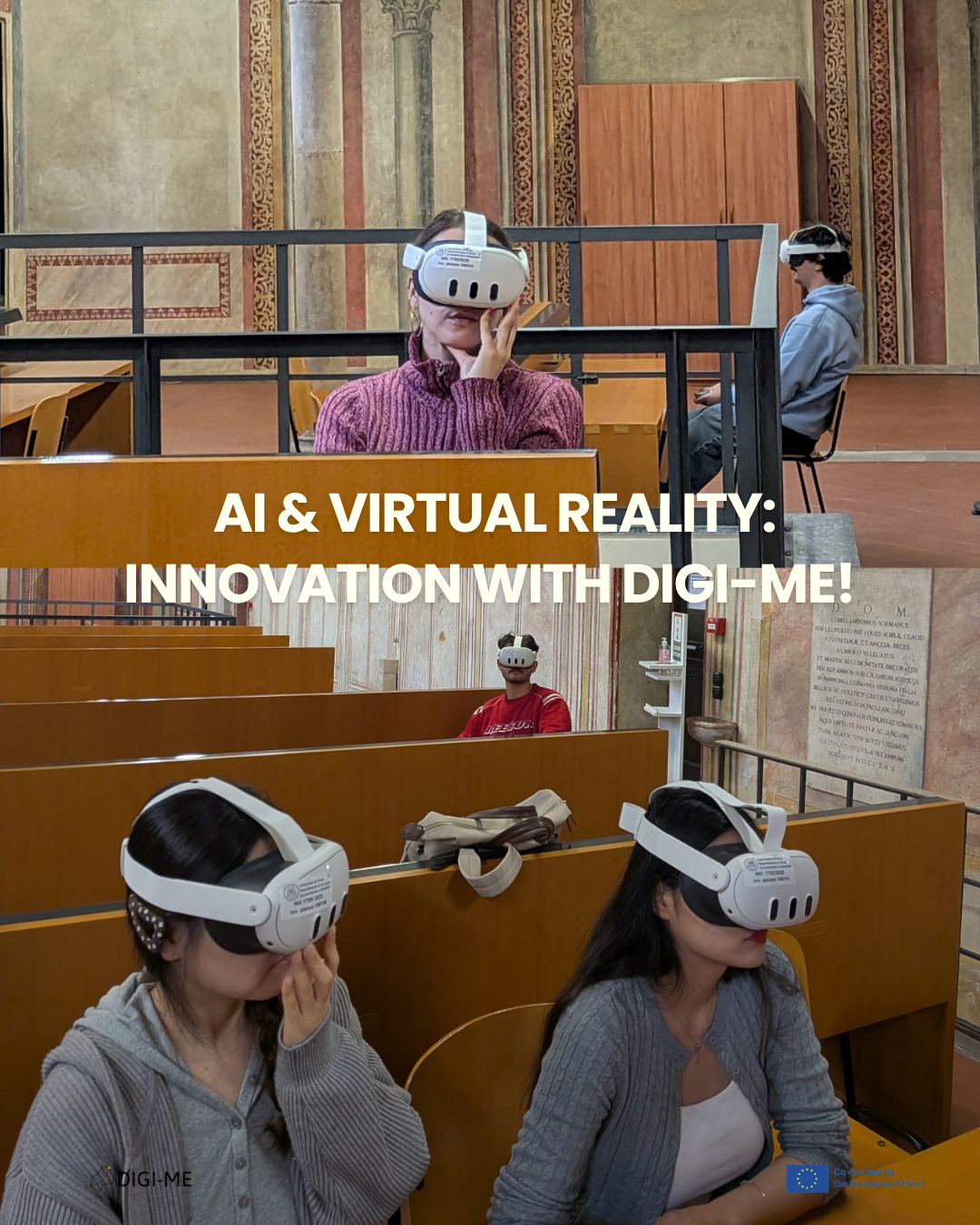
On Friday, Michele Oppioli and Benedetta Pipino organized an immersive learning workshop involving students from the Master’s Degree Programme in International Business and Entrepreneurship (MIBE).
The workshop took place during the Sustainable Performance Management and Sustainability Reporting, Governance and Ethics courses, taught by Prof. Valentina Beretta and Prof. Maria Chiara Demartini, respectively.
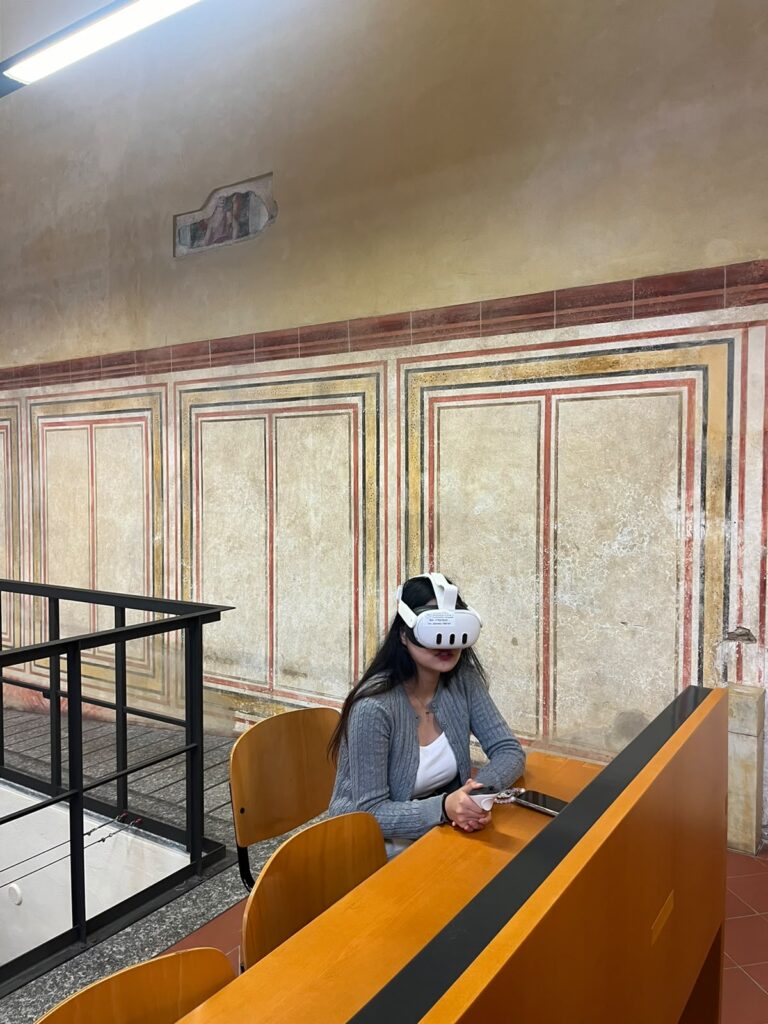
Equipped with VR headsets and using the Virtual Speech application, students had the opportunity to experience simulated job interviews focused on sustainability, discussing environmental challenges and responsible business practices in realistic virtual scenarios.
Beyond practicing communication and professional skills, the activity offered students the opportunity to have fun, discover how virtual reality works, and explore the potential of immersive technologies in education.
By stepping into virtual interview scenarios, students experienced a different approach to learning, combining experimentation, engagement, and practical skill development.
📊 From Classroom Experimentation to Academic Research
The workshop was organized as part of the ongoing research paper:
“Digital Competency Development in Higher Education: A Comparative Assessment of Traditional and Immersive Learning Environments”
Authored by Michele Oppioli, Maria Chiara Demartini, and Benedetta Pipino, the study investigates whether immersive learning environments can foster stronger digital competence development compared to traditional teaching approaches.
The research adopts a quasi-experimental methodology, using pre- and post-workshop questionnaires to assess participants’ digital competencies and explore the potential impact of immersive learning experiences.
The study is grounded in the Targeted Skills Framework (TSF), developed within the DIGI-ME project and based on the European DigComp 2.2 framework.
The TSF identifies seven key areas of digital competence: data literacy, communication, digital content creation, safety, problem-solving, emerging technologies, and self-development.
By involving MIBE students in immersive learning activities, the research aims to contribute to a better understanding of how virtual reality can support digital competence development and help prepare students for increasingly technology-driven professional environments.
🙏 A special thank you to Prof. Valentina Beretta and Prof. Maria Chiara Demartini for welcoming the VR workshop into their courses and giving students the opportunity to experience an innovative and engaging approach to learning. Their collaboration was essential in bringing this research-driven educational experience directly into the classroom.
💡 Two initiatives, one shared vision: making higher education more innovative, interactive, and engaging.
Through DIGI-ME, we continue to explore how artificial intelligence and immersive technologies can support educators, empower students, and create new opportunities for knowledge sharing, experimentation, and the development of future-ready digital competencies.