
Identifying Targeted Digital Skills for Business Students: Methodology and the First Iteration of a Targeted Skills Framework
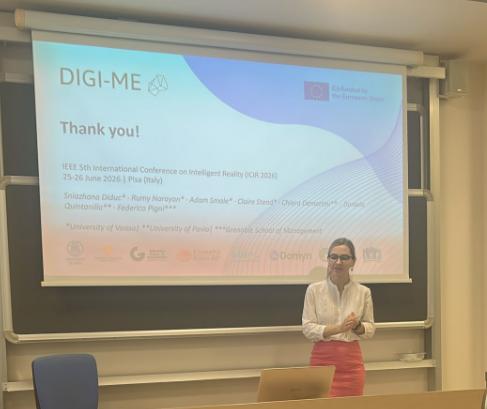
Sniazhana Diduc, Rumy Narayan, Adam Smale, Claire Stead – University of Vaasa, Finland; Daniela Quintanilla Segovia and Maria Chiara Demartini – University of Pavia, Italy; Federico Pigni – Grenoble School of Management, France – Presented at ICIR 2026.
Why it matters
Artificial intelligence and other digital tools are changing what business graduates are expected to do. Yet many business master’s programmes remain too static, treat all students as having the same digital starting point, and change more slowly than technology. Universities that simply buy commercial edtech or AI products risk adopting their narrow, commercially driven logic. This paper asks a more basic question: which digital skills truly matter for business master’s students, and how can universities identify them transparently?
What we did
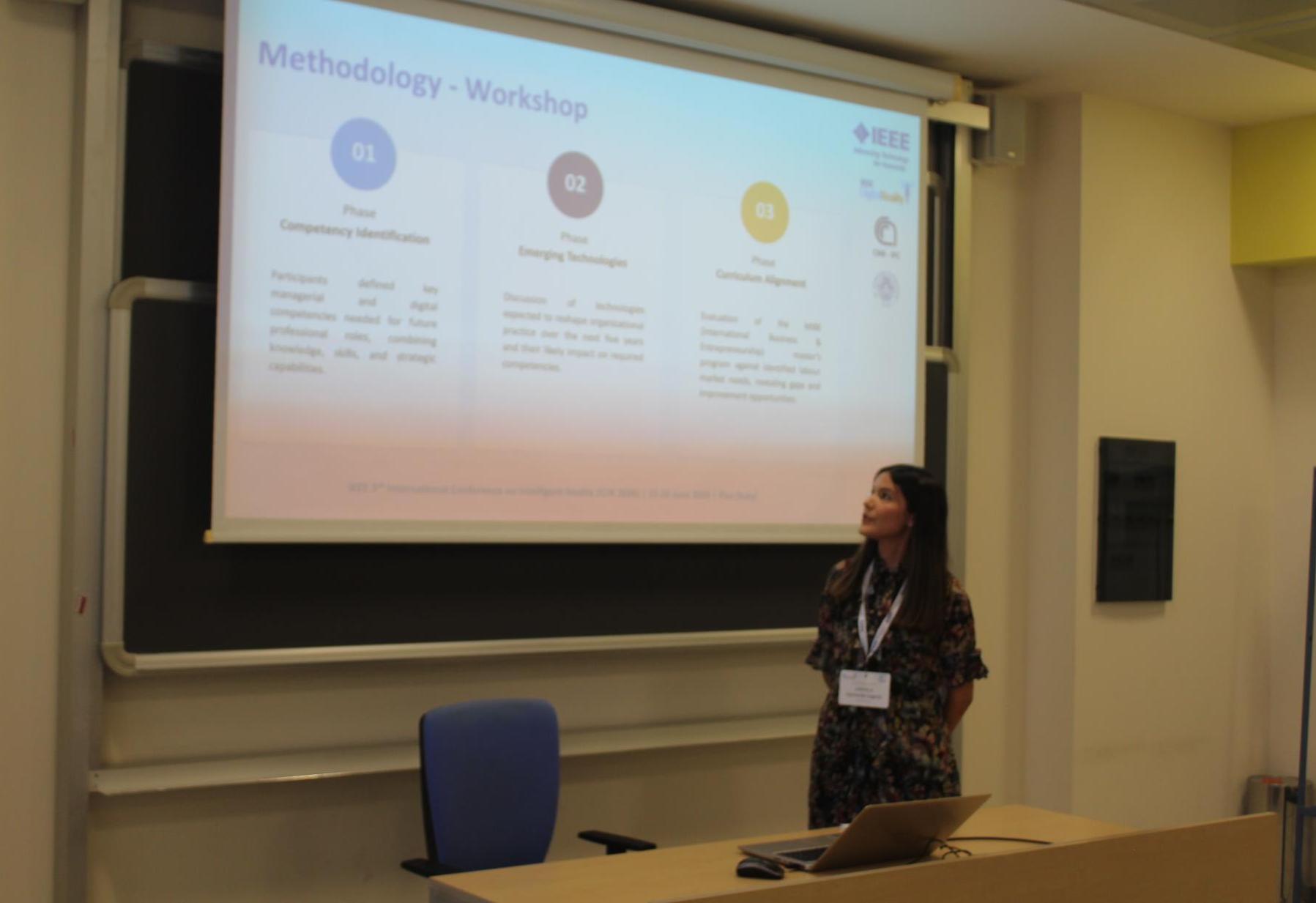
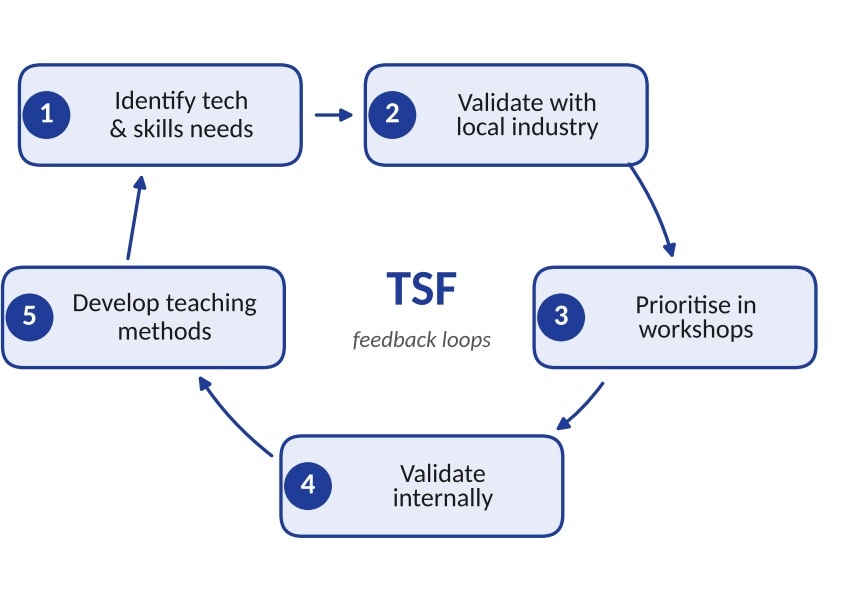
The EU co-funded DIGI-ME project developed a Targeted Skills Framework (TSF), a structured model of the digital skills needed in a specific context, here business master’s programmes. The method has five iterative steps: identifying transformative technologies and skills needs; validating findings with local industry; prioritising skills in participatory workshops across partner universities; validating the framework internally with industry partners; and developing innovative teaching methods supported by faculty training. The framework builds on the European DigComp 2.2 but extends it with skills that emerged from the needs analysis, workshops and literature review.
What we found
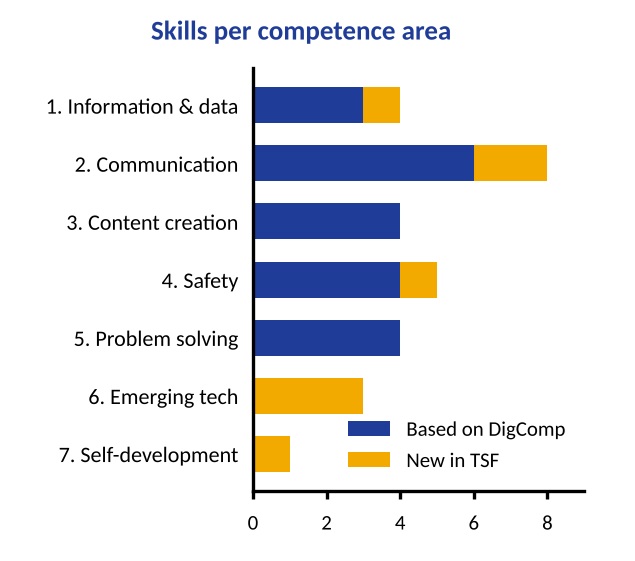
TSF v1.1 organises digital competencies into seven areas: information and data literacy, communication and collaboration, digital content creation, safety, problem solving, emerging technology integration, and digital self-development and reflective practice. They contain 29 skills, each at Foundational, Intermediate and Advanced level to allow personalised learning pathways. Eight skills are new relative to DigComp, such as reflective trust in digital systems, human-machine collaboration and evaluating ethical risks in technology use. Early implementation showed two challenges: faculty were not always confident teaching the advanced levels, and traditional assessment such as essays does not capture skills like critically evaluating AI output, so assessment often needs redesign.
What it means
The TSF is an evidence-based, academically governed alternative to commercially driven approaches. It treats AI literacy as critical agency rather than tool use, and places students through transparent, human-governed criteria instead of opaque predictive models. Local components can be adapted by each university, while the digital competencies give all institutions a shared language. The framework reflects three European universities and must be kept current, as some Intermediate skills are approaching baseline expectations. Next steps include empirical evaluation and testing beyond Europe. More about the project is available at digime-project.eu.